
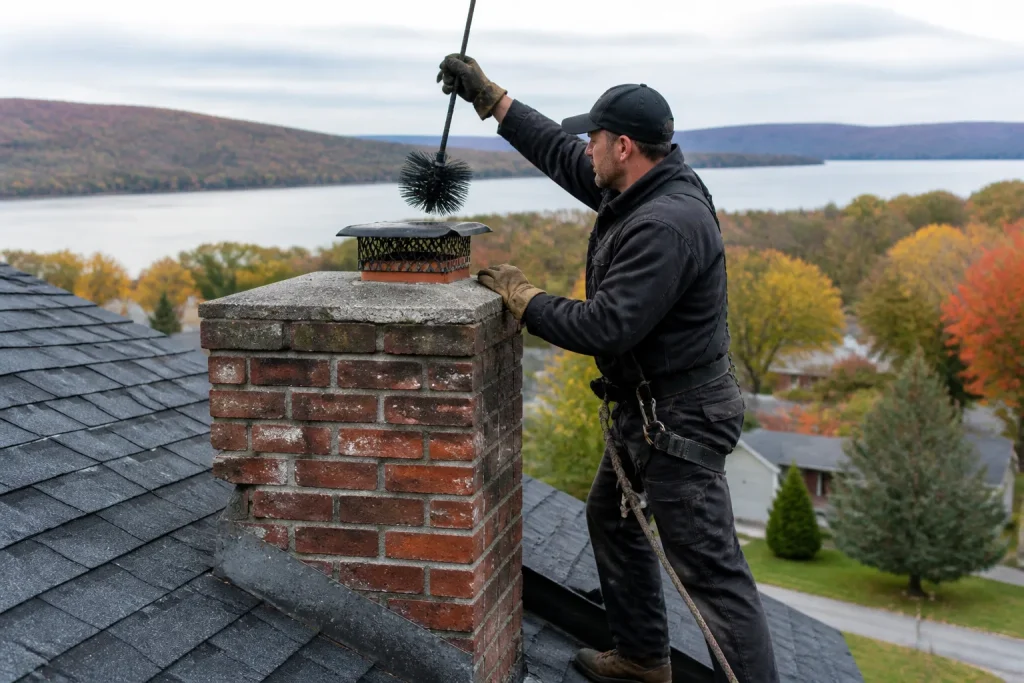
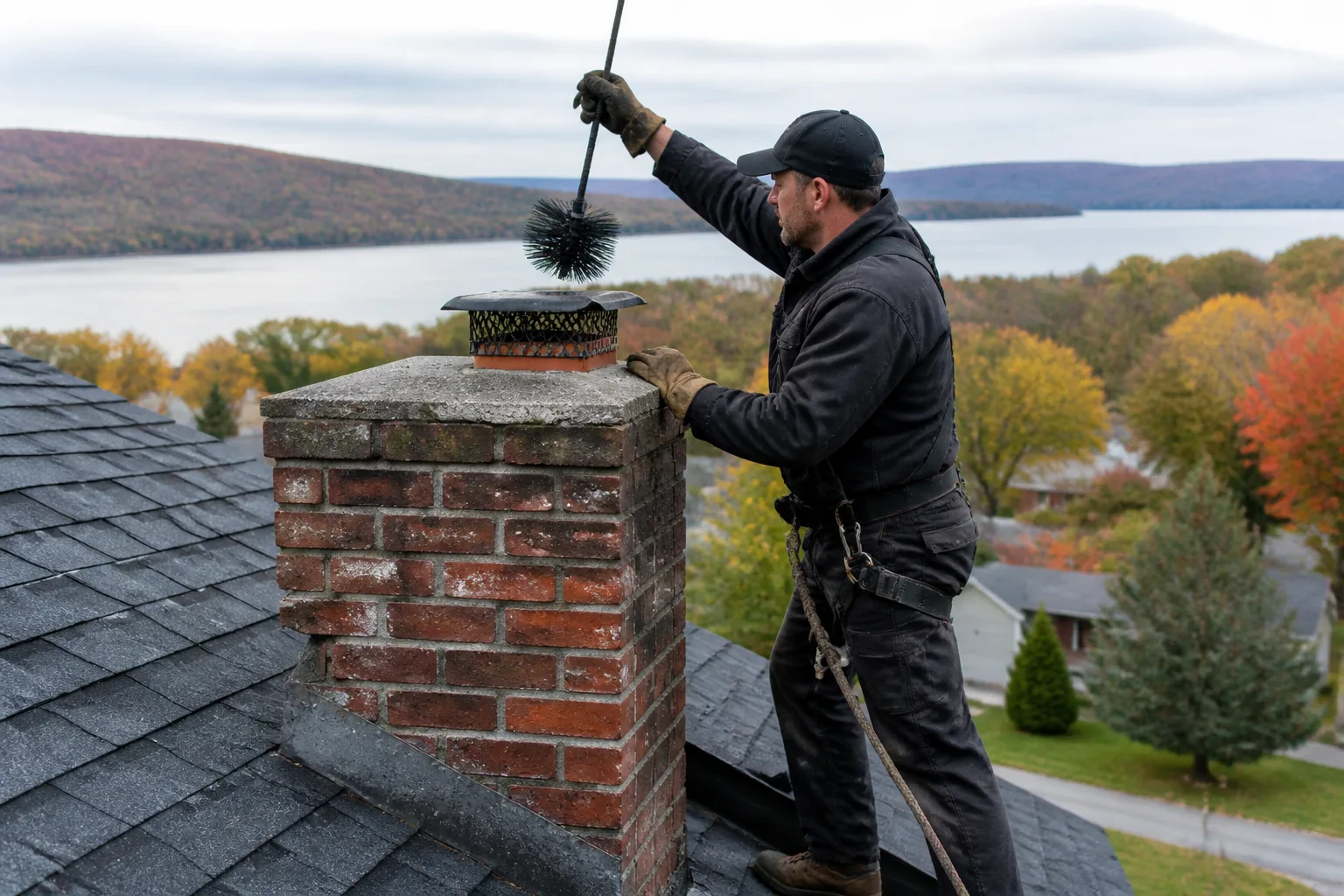
Top Signs You Need Chimney Cleaning Service – Don’t Ignore These
A white stain running down your chimney’s exterior isn’t cosmetic. It’s efflorescence, and it means water is already moving through your masonry in a way that speeds up structural damage with every freeze cycle. Most chimney problems in Tremont homes don’t arrive with drama. They show up as small, easy-to-rationalize details that homeowners wave off until the creosote or the carbon monoxide does the talking. You need cleaning service when you see those details and hear them for what they are: your chimney asking for attention before the cost multiplies.
If you’d rather not climb a ladder and shine a flashlight into a flue, call (844) 979-4331. We answer 24/7. Fast dispatch from 7am to 7pm, Sunday through Friday.
Key Takeaways
- Efflorescence, spalling brick, and a cracked crown are water-damage signs, not cosmetic ones.
- The smell tells you the problem: third-stage creosote, a blocked flue, and a draft issue each smell different.
- Light use doesn’t exempt a fireplace from annual cleaning. Debris and moisture accumulate without a single fire.
- A healthy fire has a bright, steady flame, quick draw, and almost no smoke spilling into the room.
- Nothing gets recommended without camera evidence you can see for yourself.
What Does That Smell Actually Mean?
A strong smoky odor on a warm day usually means creosote buildup in the flue, and the intensity points to which stage you’re dealing with. Third-stage creosote is the one to worry about. It’s a hard, glazed, tar-like deposit, and its smell is acrid and heavy, closer to road tar than campfire. Second-stage creosote smells drier and flakier, like charred wood. First-stage is a light soot smell most people never notice.
But not every odor is creosote. A blocked flue often smells of rot or ammonia, because the blockage is usually an animal nest or a dead bird in the chimney. In our experience in Tremont, that’s a different problem entirely: the soot is fine, but the airway is closed. Draft problems announce themselves with a cold, musty smell pulled down from the flue, and it tends to get worse on windy days or when another exhaust fan runs in the house. Same symptom, four different fixes. That’s why a smell alone isn’t enough; someone has to look inside the flue.
- Third-stage creosote: acrid, tar-like, heavy on warm days. Needs mechanical cleaning before the next fire.
- Animal blockage: rot or ammonia smell, often with scratching or fluttering sounds.
- Draft problem: cold musty smell that worsens with wind or exhaust fans.
- Light soot smell: normal for a fireplace in use, but worth confirming with a sweep.
Which Structural Warning Signs Do Homeowners Overlook?
Efflorescence is the most missed one, and it’s a clear water-damage signal. When water moves through brick and mortar and evaporates on the surface, it leaves a white, powdery salt stain. Each freeze cycle expands that trapped water, and the masonry loosens from the inside. Spalling brick is the next stage: the face of the brick flakes off, leaving a rough, crumbling surface. A cracked crown (the concrete cap at the very top of the chimney) lets water straight into the flue below, and rust on the damper plate tells you moisture has been sitting inside the firebox for a while.
What each sign tells you about the flue underneath matters more than the sign itself. Spalling brick often means the flue liner has been wet for seasons. A cracked crown usually leads to a damaged liner within the first year or two. Rust on the damper says water is entering from above, not from the room. This is where an inspection earns its keep. A sweep isn’t a cleaning receipt; it’s the document that tells you exactly what your flue can and can’t safely handle. When the damage is surface-level, HeatShield ceramic resurfacing can extend the life of the flue without a full reline, and we install DuraFlex flexible liners when the flue needs a fresh, code-compliant interior. We work with the brands the chimney industry trusts because the materials matter as much as the labor.
What Does a Healthy Fire Look Like?
A healthy fire has a bright, active flame, a fast draw, and almost no smoke spilling into the room. Flame color tells you a lot. Orange-yellow with bright tips is normal for wood. A lazy, dark orange flame, or one that smolders and smokes heavily, usually means poor draft or wet fuel. Draw speed matters just as much: open the damper, light a match near the firebox, and watch whether the smoke pulls straight up and out. If it hangs or drifts into the room, the flue is restricted.
Smoke behavior is the simplest baseline you can build. A well-drafted chimney sends smoke up and away within a couple of seconds of lighting. If you see smoke roll out over the top of the firebox, or if the glass on a wood stove clouds up quickly, something is blocking the airway. A blocked chimney isn’t just inefficient, it’s a carbon monoxide risk, because combustion gases have nowhere to go but into your living space. Carbon monoxide is colorless and odorless, which is exactly why the draft matters more than the smell. Get a working CO alarm on every level of the home. In our experience, a small change in how the fire burns is the earliest sign of a restricted flue in Tremont homes.
If you’re seeing any of this and would rather have it assessed properly, our chimney sweep includes a camera inspection and a photo report so you see what we see.
Why Does Seasonal Timing Matter So Much?
A Tremont chimney used hard all winter and left uninspected through summer carries specific risks before the fall lighting season. Winter deposits creosote, and creosote doesn’t sit still. Through warm, humid months it can harden into glazed third-stage creosote, which is far harder to remove in autumn than it would have been in spring. Summer also brings moisture. A cracked crown or a missing cap lets rain in, and an uncapped flue invites birds and squirrels to build nests in the chimney. None of that shows up while the fireplace is idle.
Come fall, the first fire of the season is when problems surface. A nest near the top narrows the flue and changes the draft. A liner soaked all summer can crack under the first heat cycle. The smart sequence is simple: clean and inspect before burning season, not after a problem shows up. If you’re already deep into fall and haven’t had the chimney looked at, that’s still the right call. A blocked flue isn’t something to test with a match.
When to Call a Pro
Any glazed creosote, any structural sign like spalling brick or a cracked crown, and any fire that smokes or won’t draw are reasons to bring in a specialist rather than handle it yourself. High deposits and structural repairs are not a homeowner job. Our technicians have up to 14 years of experience, and our chimney-only focus means we’ve seen your exact problem before. One company handles your entire chimney system, from the firebox to the crown, so nothing gets missed between contractors.
Does a Light-Use Fireplace Still Need Annual Cleaning?
Yes. Annual cleaning intervals apply even to fireplaces used only a few times a year. Debris, bird nests, and moisture damage don’t require heavy burning to accumulate. A flue that sits cold and open for months collects leaves, soot, and animal activity, and a cap that’s missing or damaged invites all three. Moisture works the same way: a small crack in the crown doesn’t care whether you lit a fire last month. It widens through freeze and thaw cycles regardless.
Consider what a light-use chimney holds. A summer’s worth of nesting material, a cracked crown letting water in, and creosote from a dozen fires last winter. When those three meet, the flue is a hazard before you ever strike a match in October. And a poorly drawing flue won’t always warn you; carbon monoxide doesn’t make a sound. An annual inspection is the low-risk habit that catches these problems while they’re still cheap to fix.
The Bottom Line
The dangerous chimney problems in Tremont homes are quiet ones: a white stain, a crumbling brick, a smell you talk yourself out of. Efflorescence, spalling, a cracked crown, and glazed creosote all start small and end expensive, and none of them announce themselves before the damage is done. Get your chimney cleaned and inspected before the fall lighting season, not after the first fire smokes you out of the room. A proper inspection gives you the facts on paper with photos you can see, so you know what’s real and what can wait. When the fix involves cap and crown work, liner repair, or a full assessment of the flue, a chimney repair specialist should be the one handling it.
If you’re in Tremont and need help, Chimney Sweep Tremont offers free estimates. Call (844) 979-4331. We answer 24/7. Fast dispatch from 7am to 7pm, Sunday through Friday.
Frequently Asked Questions
A standard chimney sweep typically runs $150 to $300, and an inspection is often included. Additions like camera documentation or cap work are quoted separately. Call (844) 979-4331 for an exact quote. Estimates are free.
Most chimneys should be swept once a year, and a wood-burning fireplace used regularly may need it more often. Even a light-use fireplace needs an annual cleaning because nests, leaves, and moisture build up without a single fire. Call (844) 979-4331 to book a sweep.
Skipped cleaning lets creosote harden into third-stage deposits, which are far harder and costlier to remove, and it lets moisture damage progress through the masonry. In serious cases, a blocked flue creates a carbon monoxide risk. Call (844) 979-4331 before the fall lighting season.
Creosote smells acrid and tar-like, worse on warm days. An animal blockage smells of rot or ammonia and often comes with scratching or fluttering sounds in the flue. A camera inspection settles it in minutes. Call (844) 979-4331 for an assessment.
Written by the team at Chimney Sweep Tremont.
Need Chimney Cleaning Help?
Call Chimney Sweep Tremont - the local pro we connect you with is licensed and insured, with free written estimates in Tremont.
(844) 979-4331